some image
341 DELAWARE AVE. BUFFALO, NY 14202
t: 716‑854‑1694  f: 716‑854‑1696


GALLERY HOURS:
Tuesday–Friday 11:00am–6:00pm

Saturday 11:00am–2:00pm.

Media Arts Program
 

Thursday, April 18, 2013 at 7:30 p.m.
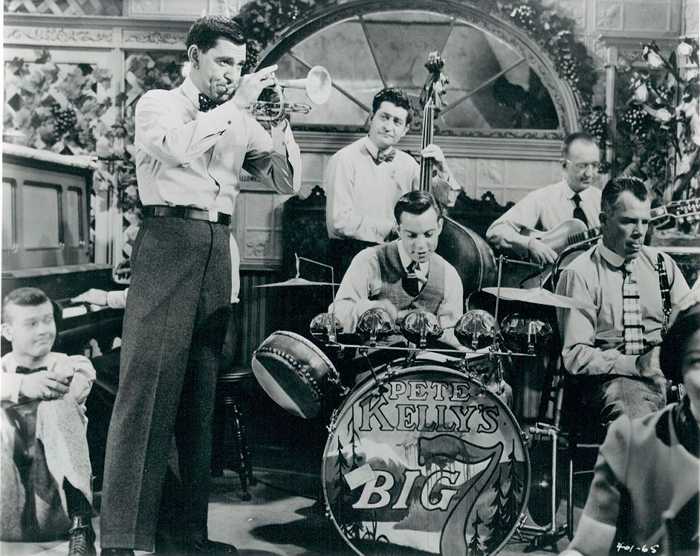
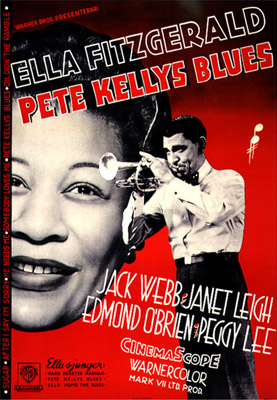
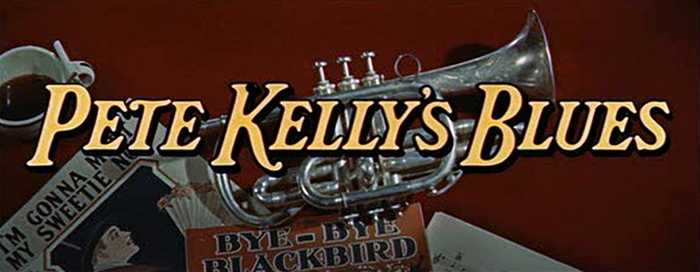
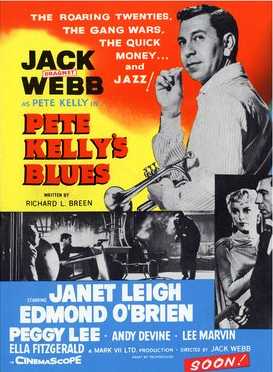
Jazz Noir: Pete Kelly's Blues

(Directed by & starring Jack Webb, 1955)
Jazz Noir: 1950–1966

Eight classic films of the '50s & '60s with classic jazz scores composed by and featuring jazz musicians—real and fictional—on screen, off screen, and (in most cases) both.

Curated by Ed Cardoni
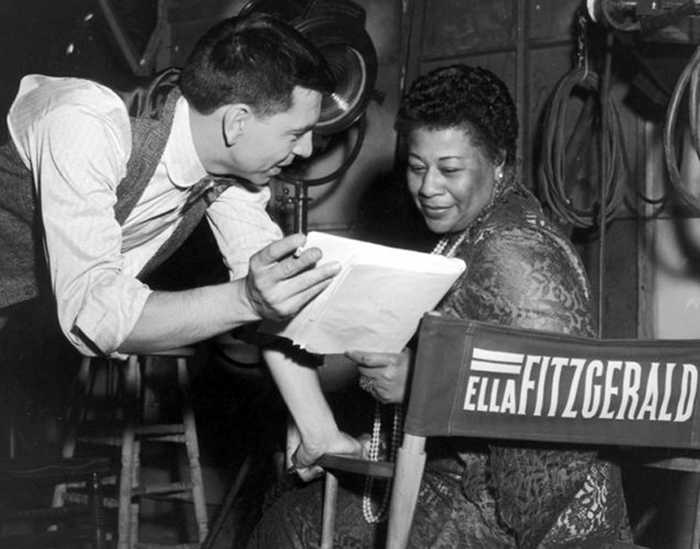
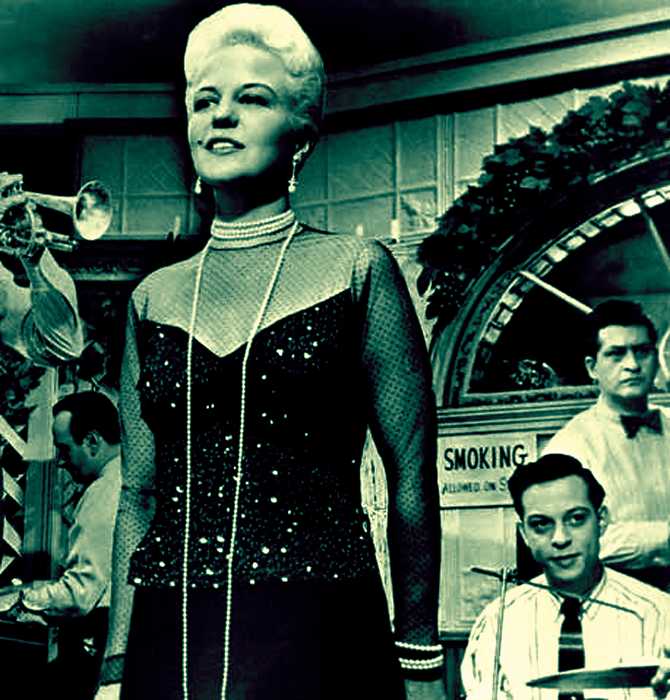
Costarring Peggy Lee, acting and singing in the Oscar-nominated supporting role of "Rose Hopkins," and with a cameo performance by Ella Fitzgerald as "Maggie Jackson." Other featured actors include Janet LeighEdmond O'Brien, Andy Devine, Lee Marvin (as clarinetist "Al Gannaway"), Martin Milner (as "Pete Kelly's hot-tempered [and drunken] drummer Joey Firestone"), Harry Morgan (uncredited), and a young Jayne Mansfield as a nightclub cigarette girl. Milner would appear as a jazz musician again a couple of years later in the next film in this series, Sweet Smell of Success, the guitarist "Steve Dallas," another role pivotal to the plot and involving substance abuse.
 
Cinematography for Pete Kelly's Blues was by Geneseo, NY-born Hal Rosson (1895–1988), best known for his black & white photography for John Huston's supreme film noir The Asphalt Jungle (1955), his color photography for the burning of Atlanta sequence in Gone with the Wind (1939), and, most famously, both black & white and color for The Wizard of Oz (also 1939), for which he won his first of five Oscars. In the musical realm he also shot the "The Trolley Song" number for Meet Me in St. Louis (1944) for Vincente Minnelli and the films On the Town (1949) and Singin' in the Rain (1952) for Gene Kelly and director Stanley Donen.
 
FROM IMDB BIO:
 
Harold G. "Hal" Rosson, a cinematographer known for his subtle and imaginative lighting, was born in Geneseo, New York [in 1889 or 1895].

[After serving in WWI,] he got a job as assistant to cinematographer H. Lyman Broening on The Dark Star (1919), which starred Marion Davies and was shot in Fort Lee, NJ. He became an employee of Davies' production company, Cosmopolitan Productions, which had been set up for her in 1918 by her lover, William Randolph Hearst. In 1920, Rosson was signed by Mary Pickford to shoot movies starring her brother, Jack.

He eventually rejoined Metro (which in 1924, merged with Goldwyn Studios and then with Louis B. Mayer Productions to become Metro-Goldwyn-Mayer), where he made his reputation. At MGM he was the lighting cameraman on Red Dust (1932), Red-Headed Woman (1932) and Bombshell (1933), on which his camera work showed off star Jean Harlow's platinum blonde look to maximum advantage. Rosson was married to Harlow for two years, from 1933 to 1935, which was indicative of his high status in the film community. In 1935 he moved to England to work for Alexander Korda's London Film Productions, but eventually he returned to MGM.

Rosson became a noted cinematographer in color, using the skills he had developed shooting in black & white to soften the palette created by the Technicolor process.…Rosson was hailed for his photography on The Wizard of Oz (1939), for which he received the first of his five Academy Award nominations.…

Ironically, four of Rosson's five Oscar nominations for best cinematography were for his B&W work. His B&W cinematography for The Asphalt Jungle (1950), for which he received his fourth Oscar nomination, is noted for creating the stark atmosphere that was central to the story and the overall success of the John Huston picture.

[After retiring in 1958]…he returned to shoot El Dorado (1966) for Howard Hawks. In addition to shooting eight films for Allan Dwan between 1915 and 1929 and The Asphalt Jungle (1950) and The Red Badge of Courage (1951) for John Huston, Rosson also worked many times with directors Josef von SternbergSam WoodCecil B. DeMilleW.S. Van DykeHoward HawksMervyn LeRoyNorman TaurogFred Zinnemann, and Vincente Minnelli. He shot the "The Trolley Song" number in Meet Me in St. Louis (1944) for Minnelli and On the Town (1949) and Singin' in the Rain (1952) for Gene Kelly and Stanley Donen. His most famous collaboration was with director Victor Fleming, starting in 1923 with Dark Secrets (1923) and culminating in 1939 with his work on The Wizard of Oz (1939) (in December 1938, under the direction of producer David O. Selznick, Rosson shot the burning of Atlanta sequence for Gone with the Wind (1939), for which Fleming was credited as the director).
 

Licensed for public exhibition through Swank Motion Pictures, Inc.