To learn more about the benefits of becoming a member, please click here.
Reel Party 3: A Queer Film Party for Anyone Who Likes Film and Fun
Tonight's Film Feature:
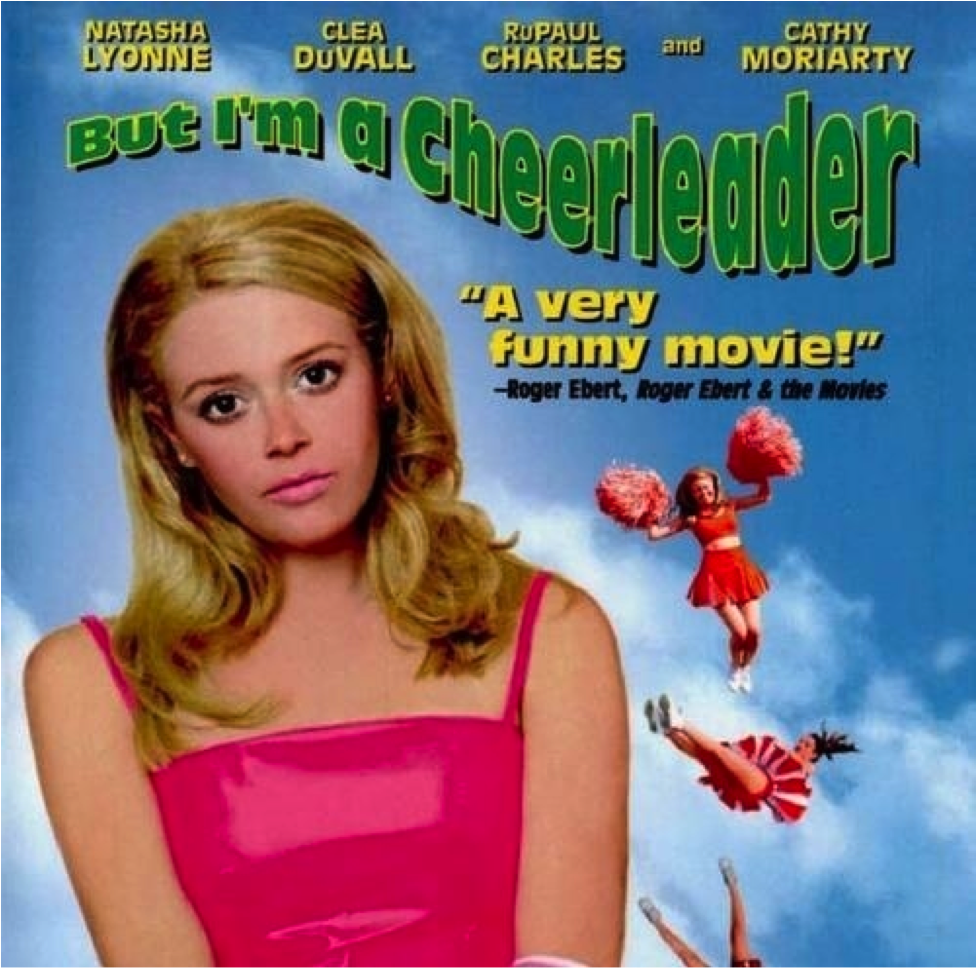
But I'm a Cheerleader
(Jamie Babbit, 1999, 85 min.)
Licensed for public exhibition (non-theatrical) through Swank Motion Pictures, Inc.
But I'm a Cheerleader is a 1999 satirical romantic comedy film directed by Jamie Babbit and written by Brian Wayne Peterson. Natasha Lyonne(who currently plays "Nicky Nichols" on Orange Is the New Black) stars as Megan Bloomfield, an apparently happy heterosexual high school cheerleader. However, her friends and family are convinced that she is a homosexual and arrange an intervention, sending her to "True Directions," a residential inpatient conversion therapy camp to cure her lesbianism. There Megan soon realizes that she is indeed a lesbian and, despite the therapy, gradually comes to embrace her sexual orientation.
The supporting cast includes Michelle Williams, Julie Delpy, Clea DuVall (HBO's Carnivale, Heroes, American Horror Story: Asylum, and Girl, Interrupted) Cathy Moriarty (Raging Bull), RuPaul, Mink Stole, and Bud Cort (MASH, Harold & Maude, Brewster McCloud).
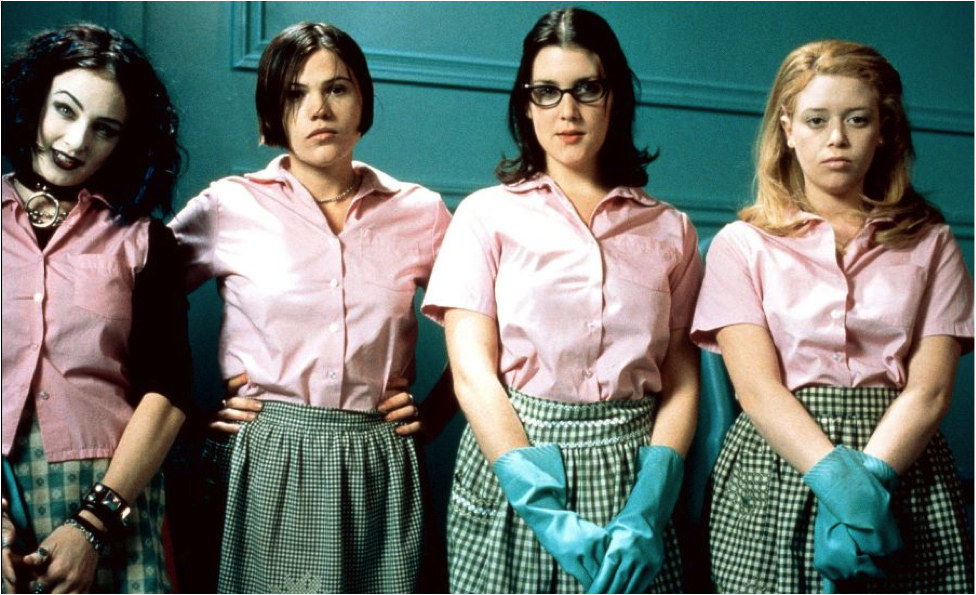
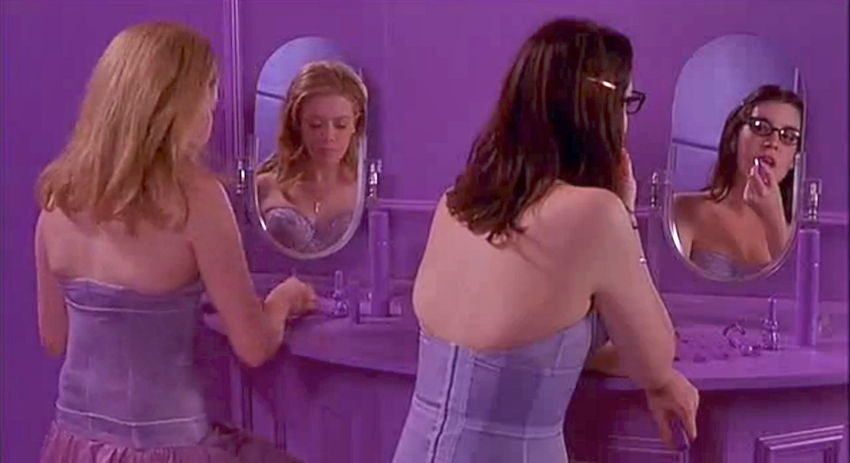
But I'm a Cheerleader was Babbit's first feature film. It was inspired by an article about conversion therapy and her childhood familiarity with rehabilitation programs. She used the story of a young woman finding her sexual identity to explore the social construction of gender roles and heteronormativity. The costume and set design of the film highlighted these themes using artificial textures in intense blues and pinks.
When it was initially rated as NC-17 by the MPAA, Babbit made cuts to allow it to be re-rated as R. When interviewed in the documentary film This Film Is Not Yet Rated, Babbit criticized the MPAA for discriminating against films with gay content.
Babbit says that her influences for the look and feel of the film included John Waters, David LaChapelle, Edward Scissorhands, and Barbie™. She wanted the production and costume design to reflect the themes of the story. There is a progression from the organic world of Megan's hometown, where the dominant colors are orange and brown, to the fake world of True Directions, dominated by intense blues and pinks (which are intended to show the artificiality of gender construction). According to Babbit, the germaphobic character of Mary Brown represents AIDS paranoia, and her clean, ordered world is filled with plastic flowers, fake sky, and PVC outfits. The external shots of the colorful "Barbie Dream House," complete with a bright pink picket fence, were filmed in Palmdale, California.
Many critics compared the film unfavorably to the films of John Waters, and criticized the deliberately colorful production design. Although the lead actors were praised for their performances, some of the characters were described as stereotypical.


 Tonight's Film Feature: