


Thursday, April 13, 2023 at 7:00 p.m.
FREE
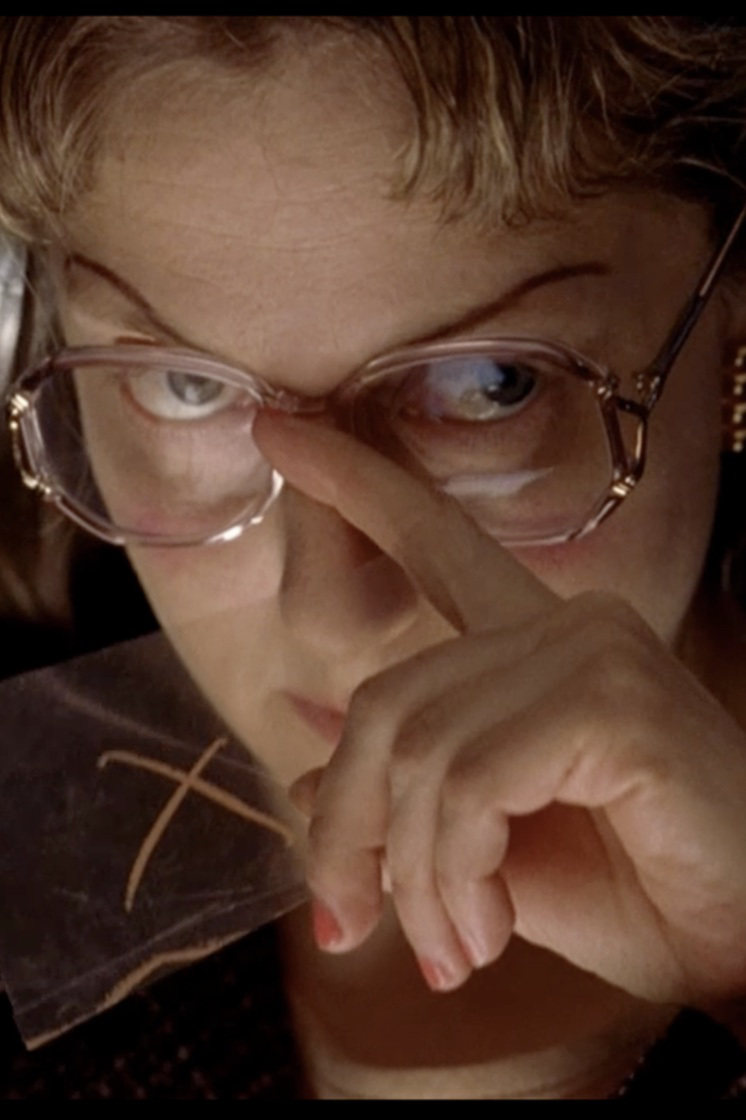
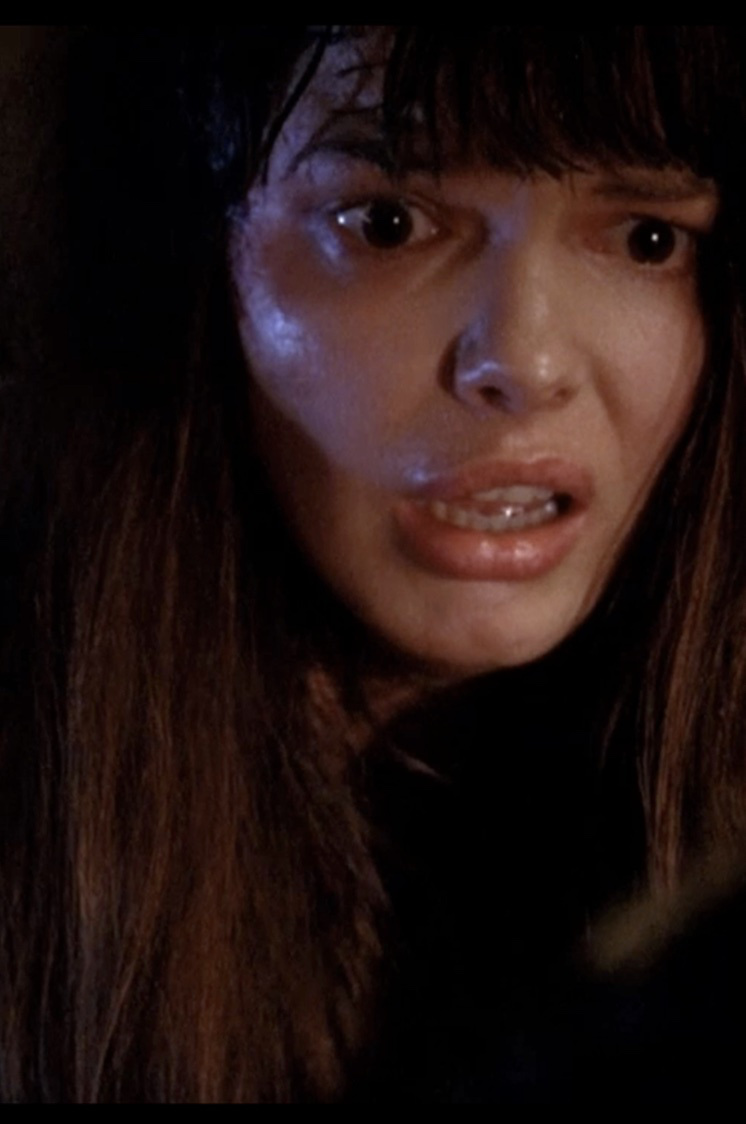
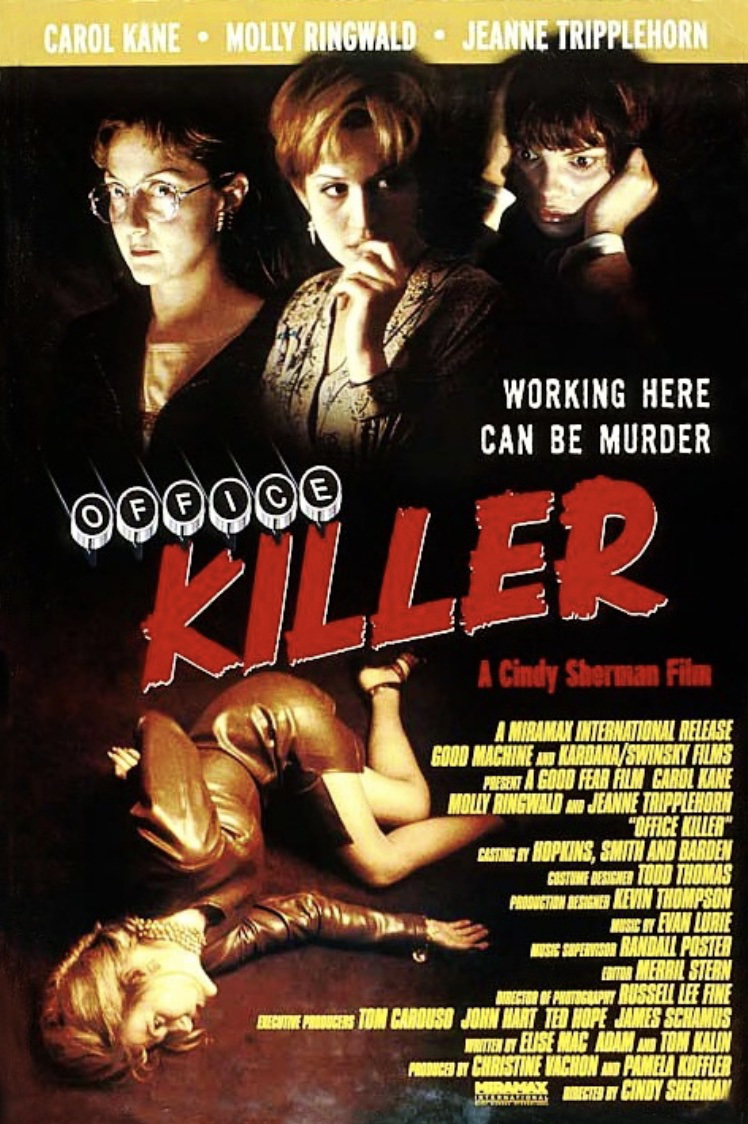
"Office Killer, by photographer and first-time director Cindy Sherman, impresses more than perhaps it should, thanks mostly to its ingenious blend of high-power dramatics, macabre humor, and a new twist or two on a time-worn formula. What compensates for the basic amateurishness of this movie is a brilliant performance by Carol Kane as the deranged Dorine Douglas and several harrowingly suspenseful murder sequences that leave audiences grabbing for their seats. Add an atypical ending, avoiding the easy cliché of the tagged-on-moral-to-the-story, and you have the characteristics of a fresh outlook on the much-exploited slasher/thriller genre, familiar to audiences since Hitchcock's days, but this time with a woman performing the killings. The comic touches add a dimension of irony and paradox to the revolting sights of random slaughter and decomposing bodies, intensifying an awareness of madness loosened upon innocent bystanders.
"Setting up a group of people of the most uninteresting kind—office workers—at first the plot seems bland and commonplace. Dorine, an innocuous-looking young woman with owlish eyes hiding behind thick glasses and wearing outdated dresses, gives the impression of both innocence and ineptitude, especially of the kind that results from being trampled under. The weekly magazine she works for is currently downsizing, meaning Dorine from now on will have to do part of her work at home, on a laptop computer she barely knows how to handle. The only denizens of her furniture-bare apartment are a grouchy invalid mother and a mouse-hunting cat, both diabolical. Dorine is seen dropping a dead mouse down a garbage disposer. She pronounces her words as a robot first learning to speak English would, elongating the vowels and crisply spitting out the consonants. She is the joke at the office, considered…useful but disposable, barely a female and only borderline human. Her co-workers, elegant women with boyfriends, tempers, and super-charged ambitions, include Norah Reed (Jeanne Trippleton), Kim Poole (Molly Ringwald), and Virginia Wingate (Barbara Sukowa), whose asthma condition compels her to constantly breathe into a tube. In this competitive woman's world, the last will become first, and it is Dorine, the one trampled under, who will eventually dominate" (Constantine Santas, Senses of Cinema, February 2001).