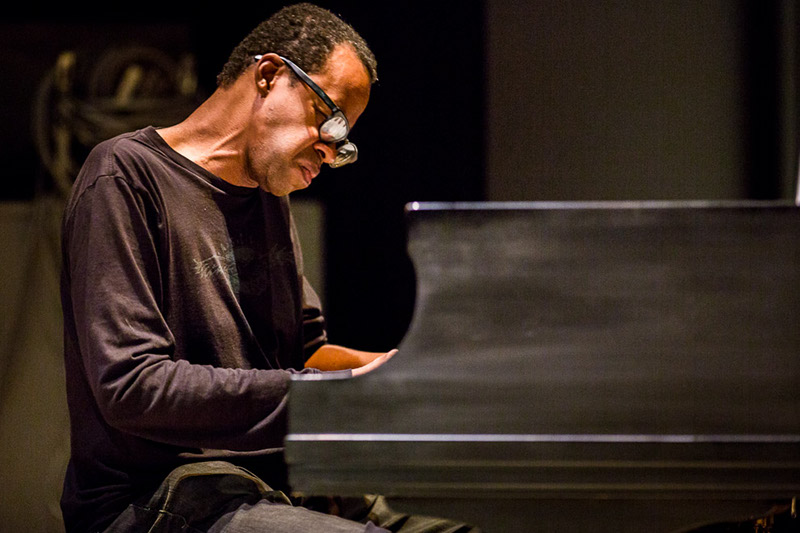
Matthew Shipp was born December 7, 1960 in Wilmington, Delaware. He started piano at 5 years old with the regular piano lessons most kids have experienced. He fell in love with jazz at 12 years old. After moving to New York in 1984 he quickly became one of the leading lights in the New York jazz scene. He was a sideman in the David S. Ware quartet and also for Roscoe Mitchell’s Note Factory before making the decision to concentrate on his own music.
Mr. Shipp has reached the holy grail of jazz in that he possesses a unique style on his instrument that is all of his own—and he’s one of the few in jazz that can say so. Mr. Shipp has recorded a lot of albums with many labels but his two most enduring relationships have been with two labels. In the 1990s he recorded a number of chamber jazz CDs with Hatology, a group of CDs that charted a new course for jazz that, to this day, the jazz world has not realized. In the 2000s Mr. Shipp has been curator and director of the label Thirsty Ear’s "Blue Series" and has also recorded for them. In this collection of recordings he has generated a whole body of work that is visionary, far reaching and many faceted. Matthew Shipp is truly one of the leading lights of a new generation of jazz giants.
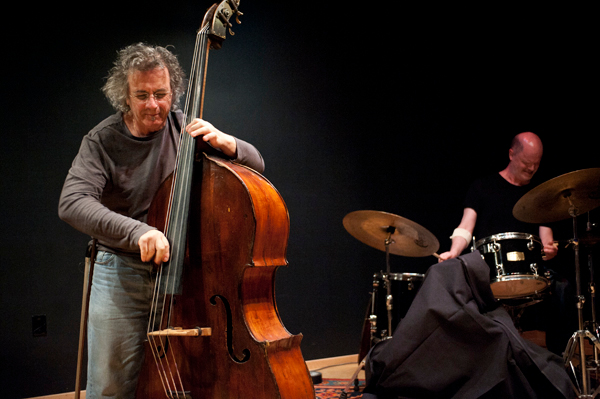
"Although bassist Michael Bisio has performed with pianist Matthew Shipp on occasion over the past few years, very little documentation of their working relationship existed until the formation of Shipp's current trio, which features Bisio and drummer Whit Dickey. Floating Ice, their first recording together as a duo, arrives on the cusp of the trio's live debut, Art of the Improviser (Thirsty Ear, 2011), and studio follow-up, Elastic Aspects (Thirsty Ear, 2012).
The locomotive title track opens the date, setting the stage for a series of virtually telepathic exchanges between the two musicians that belie the relatively brief nature of their partnership. The mantra-like minimalism of Shipp's cascading pianism finds stylistic accord in Bisio's bustling pizzicato, their interweaving phrases vacillating between dynamic extremes of texture, tone and volume with impeccable timing. The pianist's scintillating filigrees dance gracefully among the bassist's oblique flourishes on "The Queen's Ballad," their dusky romanticism unified by a shared aesthetic sensibility that intermittently references enigmatic fragments of standard forms—an aspect similarly demonstrated by the phantasmagoric abstractions of "Disc."
Although the album's title implies icy soundscapes awash in eddies of cool tranquility, the individual song titles suggest a much more varied lot. The aptly named "Swing Laser" careens with focused intensity, its fervent demeanor born from Shipp's pithy salvos and Bisio's subterranean rumblings; the bassist's sinewy arco cadenza at the coda further embellishes the number with multihued layers of coruscating brilliance. "Supernova" is similarly dramatic, while the mercurial "Holographic Rag" offers historical sleight of hand, transposing venerable ragtime tenets into a hallucinatory cubist collage of severe angles and capricious detours. "Decay" closes the record with simmering ardor; Shipp's pointed key strikes accentuate Bisio's coarse glissandi as the two pirouette unfettered until the final notes drift into oblivion.
Superbly recorded at Parkwest Studios in Brooklyn, Floating Ice is a revealing portrait of two master improvisers engaged in spontaneous discourse, with every nuance of their attentive interplay captured in minute detail. A testament to their shared chemistry, this session suggests the beginning of a long and fruitful collaboration."
Hallwalls Music Program is made possible through the generous support of David Kennedy, a grant for jazz programming from the Doris Duke Charitable Foundation, & public funds from the Music program of the New York State Council on the Arts, a state agency.