Scholars @ Hallwalls - What the 1835 Baltimore Bank Riot Tells Us about Policing in the Early American Republic
Select Fridays between September 2014 and May 2015, Hallwalls Contemporary Arts Center becomes an intellectual salon. Scholars at Hallwalls features eight thought-provoking, award-winning lectures in the humanities, presented in the intellectual and inspiring setting of Hallwalls. Faculty Fellows will present their cutting-edge humanities research in terms accessible to those in other disciplines and outside academia. The events will continue to be social occasions as well, with complimentary hors d'oeuvres...
All lectures are free and open to the public.
This paper tells the story of one of the biggest riots in U.S. History, the Baltimore Bank Riot of 1835. It argues that the riot both reveals the growing importance of property rights in U.S. political discourse as well as the ways that discourse empowered certain people—adult white men in particular—to police the city on their own. Many of us interpret 19th century riots as part of a larger process of professional police reform, as the trigger for a powerful state. This paper cautions that we should be careful in assuming such state power grew at the expense of democracy: certain forms of popular policing persisted under the very logic that underwrote the growth of state police institutions, and those practices are still with us today.
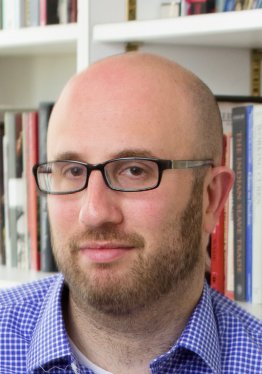
Adam Malka is an Assistant Professor of U.S. History at the University at Buffalo, SUNY. His work centers on the ways Americans in the early U.S. Republic understood and experienced both politics and power. In particular, he is interested in state formation, race and gender ideology, and the ways rights discoursed empowered only certain groups of people in the early United States. He is currently at work on a study that examines policing and punishment in post-Revolutionary Baltimore.