


Friday, September 15, 2023 — Friday, October 27, 2023
Opening Reception
Friday, September 15, 2023
7 to 10 pm
Artists' Talk
Friday, September 15, 2023
7 pm
exhibition continues through October 27
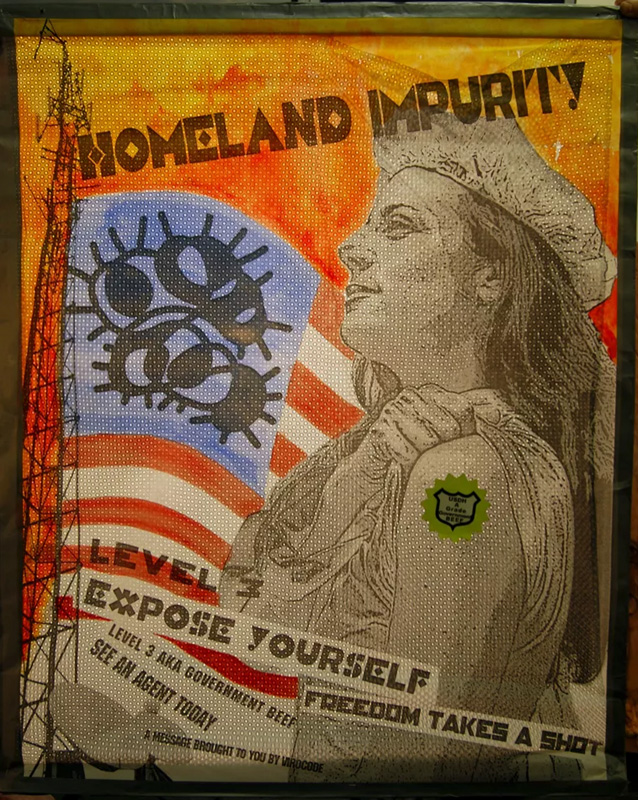
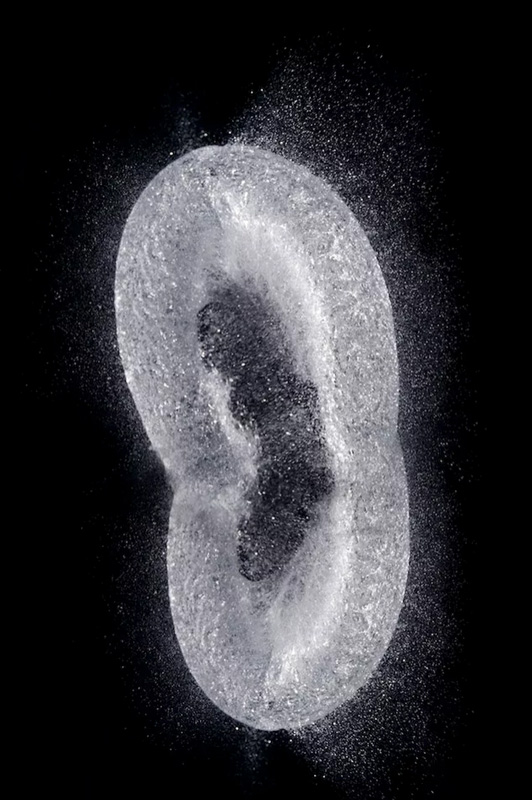
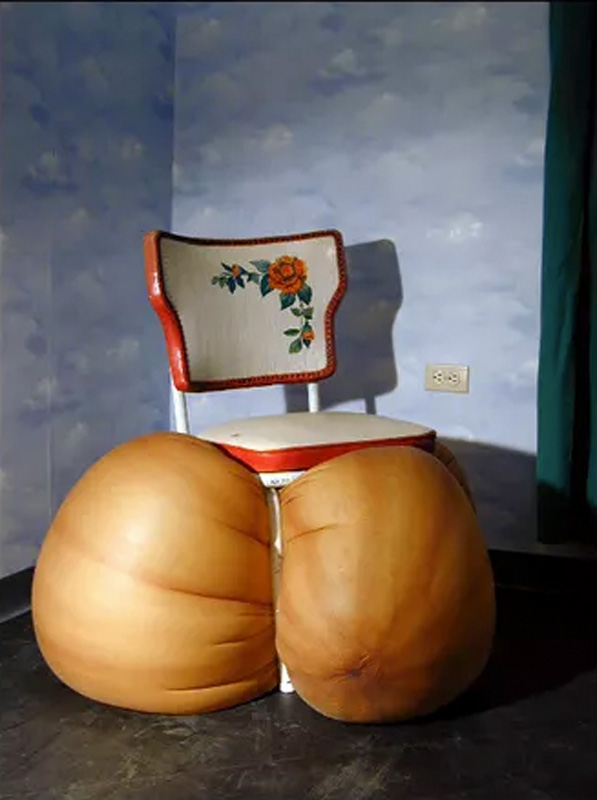
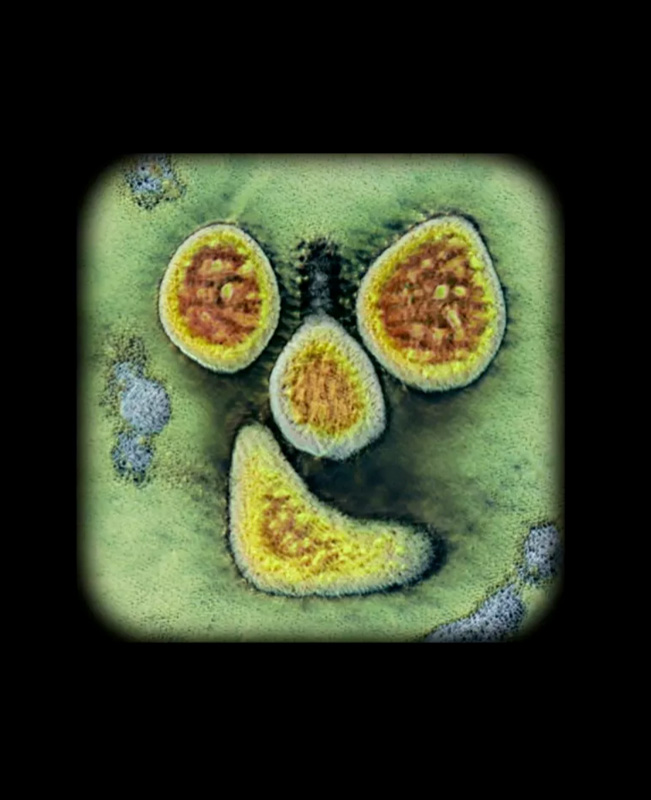
"The work of virocode looks for the logic in the pathological, the ethos of electromagnetism, the intellect of inorganics, the clarity of catastrophe, and the fortune in monstrosity.
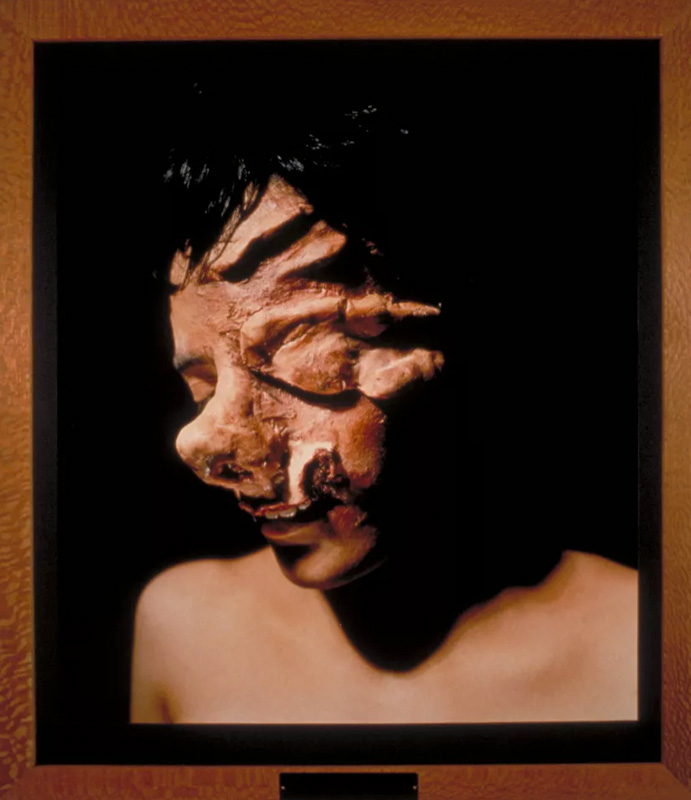
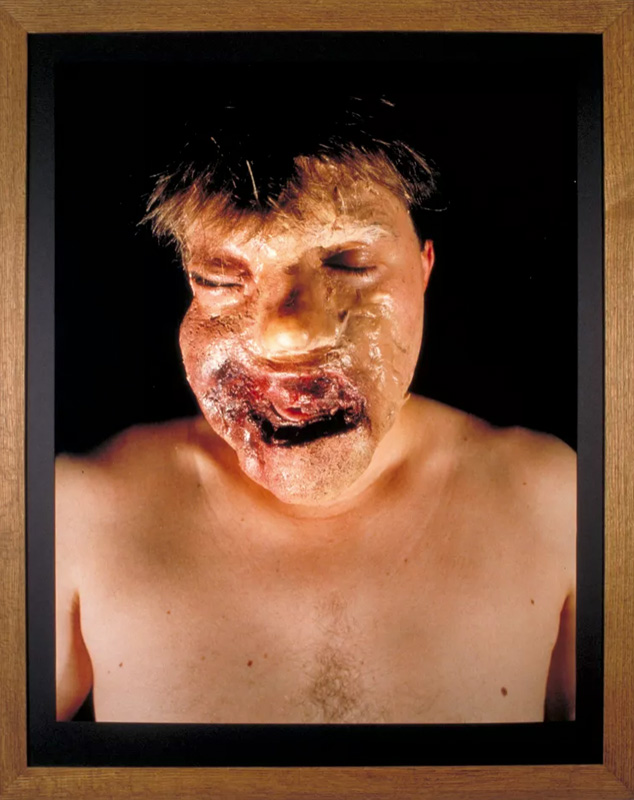
"Biological infection models how information is used to change our perception of reality. Infections physically change us: the encounter may cause fever, stimulate autoimmunity, transmit mutagens, erode organs, infect our blood supply, disrupt our neurological capacity and ultimately teach us adaptive lessons. We are not the same as before our infection.
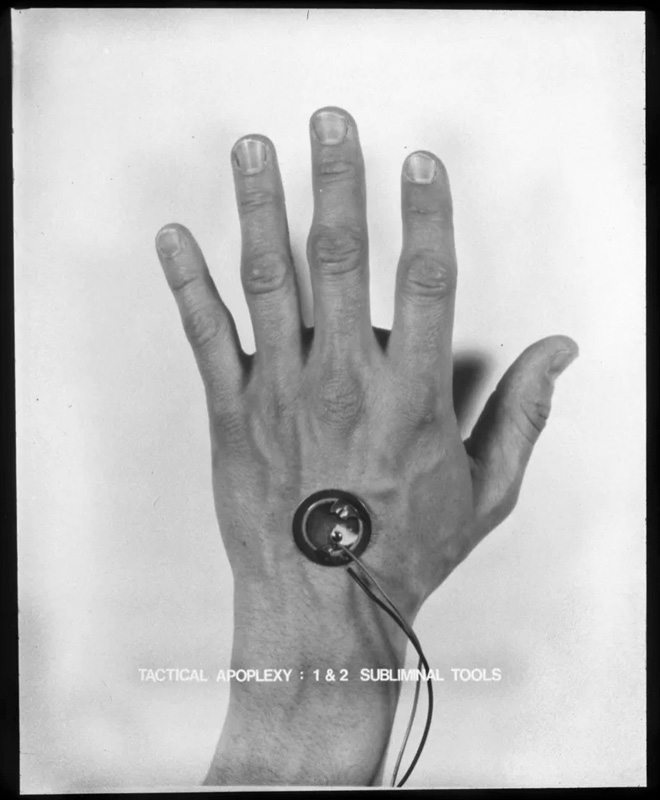
"Materials infection is a process of inorganic structures seeding the human terrain. By habituating humans to not see them, object world blooms. Our curiosity and abilities have enabled us to be the vectors which propel the object world. Once we no longer question the domain of objects, we become utterly dependent on it. Material information is the crop we plant, harvest, and devour as though a nutrient. Itness has become as invisible and as essential as air.
"virocode expects this, but so what. A virus is a semi-organic, semi-alive machinery. It is a means to replicate but not self-repair, a potential to mutate but dependent on an organism to sustain, a vector to signal but requiring a host to transmit. Similarly, the notion that atomic processes are not living but yet are what comprises life is a very untenable paradox of ontology. Self-surgery—or autopoeisis—may be the only criteria for life.
"From this point, as well as all other points, one must insert your desired information—your password is already known. If the process breaks down, you must fix it or cease further function."
••••••••••
Since the late 1980s, the artist duo virocode have explored and pursued questions around humanity's position within the increasingly complex scenario of the Anthropocene. Infections, mutations, biological imperatives, intentional and incidental transmissions have all factored into the questions posed within their work. A commonality across the years and various media of artwork is not a confrontational position in the face of an infectious and dangerous world but an exploration of adaptability as the most compelling agent within the equation of change.
virocode concedes to certain unquestionable parameters without succumbing to or expressing defeat. Theirs is an acceptance of, as they say, the "itness" of the world, the material presence that blooms amid present—and presumably future—conditions. Theirs is a recognition of the "self-surgery" of autopoesis, that there is an inevitably in how the world constructs and reconstructs itself, whether through a fresh viral infection or the blooming of cell phone towers across the landscape, the latter both replicating the real while also being real. There is, throughout, an elastic flex of imagery and material existing within a rigorously playful intellectual aesthetic.
For Hallwalls, the artists will present a cross-section of representative works from 1987 through 2023 that exemplify and demonstrate these ideas while also illustrating the intense visual iconography blooming forth from these explorations. Again and again, the works in the exhibition—primarily photographic and video—will demonstrate an agnostic kind of conceptualism, a keen eye toward the ever-changing environment of our lives that reserves judgement because the dice that is tumbling has not yet finished rolling. Nothing is posited as inevitable, most futures remain possible.
virocode is a collaborative practice of Andrea Mancuso and Peter D'Auria that explores the balance between the inorganic and the organic through an artmaking practice that seeks to capture and reveal blossoming inorganic life. virocode has long been concerned with investigating symbiotic relationships between the organic and inorganic—in a non-judgmental manner and with an open question about our collective relationship to the Anthropocene. By virtue of the wide lens through which virocode approaches the world, alterations within the current epoch are just that, and our intense relationship with the non-biological has only just begun.
virocode is a collaborative effort of Peter D'Auria, Andrea Mancuso, and Claudia D'Auria that has been exhibiting work in photography, video, installation and the digital arts throughout the United States and in Europe including: The Museum of Modern Art and Paul Robeson Gallery in the New York City metropolitan region; Artist Television Access, Artspace, Southern Exposure Gallery, and the Emanuel Walter and Etholl McBean Galleries in San Francisco; The Pacific Film Archive in Berkeley, California, Diverseworks Art Space in Houston, Texas, The University of Arizona Art Gallery, in Tucson, Arizona, Impakt Festival in The Netherlands, the European Media Art Festival in Osnabruck, Germany and at the Albright Knox Art Gallery, Burchfield-Penney Art Center, CEPA gallery, Squeaky Wheel and Hallwalls in Buffalo, New York. virocode began working together at the State University of New York at Buffalo, studying with Marion Faller, Paul Sharits and Tony Conrad. Andrea Mancuso received her PhD in Visual Studies and her BA from the State University of New York at Buffalo, and her MFA in Performance/New Genre from the San Francisco Art Institute studying with Doug Hall, Margaret Crane, John Winet, Kathy Acker and Tony Labat. Andrea teaches contemporary art and film in Buffalo, New York and is currently an Art21 Educator in residence. Peter D'Auria received a BA in Art and MA in Pathology from the State University of New York at Buffalo School of Health and Biomedical Sciences, and a Physician Assistant Degree from Daemen College. Peter currently works in clinical practice in the Buffalo area.
http://www.virocode.com
Claudia D'Auria has exhibited artwork at MOMA in New York City, MOMA PS1 in Queens, New York, YoungArts Jewel Box Gallery in Miami, Florida, and Box Gallery in Buffalo, New York. Claudia graduated with a BArch degree from The Cooper Union in New York and was a resident artist at AZ West studio in Joshua Tree where she completed a thesis on the cultural impact of the colonial myth of ‘wilderness.’ Claudia has worked for the Museum of Modern Art, Creative Time, Imagination of Space House on Governors Island, and Eric Forman Studio. She is currently an architectural designer working in Brooklyn, New York.
See more of Claudia’s work at www.claudiadauria.com