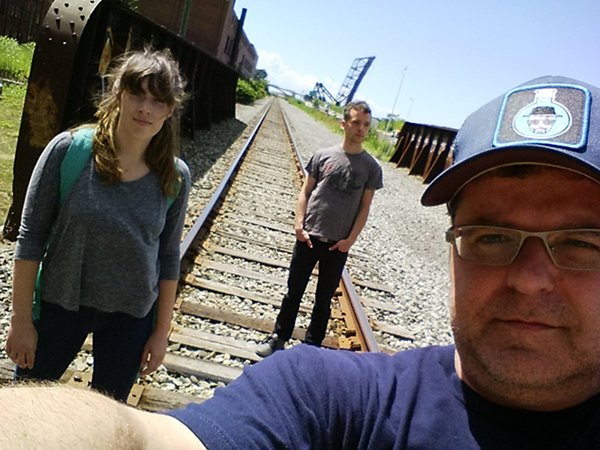
Curated by John Massier, Kyle Butler, Rebecca Wing
Opening reception 8 to 11 pm
Exhibition continues through October 30
Hallwalls presents the fourth part of its yearlong series Amid/In Western New York, regional survey exhibitions curated by John Massier, Kyle Butler, and Rebecca Wing. Amid/In is a research-heavy project centered on the studio visit process, clustered in tight succession, and with artists/works selected in the month leading up to the exhibition's opening. It has no specific theme and is seeking to root out whatever people have going on at this moment. It is a casual survey, intensely-wrought.
Q&A With the Curators
Q: So, after a brief summer hiatus, you’re all back on the Amid/In grind.
JOHN MASSIER: Our lovely grind. The curatorial hamster wheel.
KYLE BUTLER: THANK GOD
REBECCA WING: It’s good to be back at it.
Q: Was it a studio visit summer?
JM: Kyle was out of town teaching in Oswego during July and Rebecca and I had to deal with Hallwalls’ fortieth anniversary auction, the members’ exhibition, and the summer drawing rally, so August was the first time we could all get together again and start our visits up.
KB: We didn't get back into it until August, but that month was busy enough with visits to tone the season.
RW: I think the earlier part of the summer went pretty quickly for all of us so, when we started back up last month, it felt like we had never stopped.
Q: And what’s the count?
JM: We’ve concluded 115 studio visits since November 2014.
KB: like, a thousand studio visits.
RW: Even so, never enough.
Q: That’s a mass quantity of visits. Does it ever become a chore?
JM: I think the brutality of last February was the only time we might have called it a chore and that was due to the weather, not the artists. Studio visits never get old—everyone does it differently, shows you different things, uses different spaces, speaks about their work and processes differently. If anything, the quantity tends to underscore the wide diversity of an art scene at any given moment. There are some overlaps of concept and approach, but far more iconoclasm among any selected group.
KB: Not at all. It's been great to see people speak in their own words, in their own spaces about what they do. It's a really positive experience. It can be easy to settle into one cynical mood or another when cooped up at home, relatively detached, or caught up in the usual social rhythms.
RW: Trying to picture how I’ll feel when the studio visit process is over, I imagine I’ll be pretty disappointed. There’s never a deficiency of new people to visit who are working in surprising or delightful ways. So, yeah, not a chore, more of a treat.
Q: With that large of a sample size, are there interesting distinctions between how people work, or where they work?
JM: Plenty. We’ve met people in bona fide rented studios, in their homes, in their kitchens, at coffee shops. Especially in the case of a younger generation of artists, “studio” might be the sketchbook they carry around with them, or their laptop. The “where” is never as important as the “what” anyway—it’s all about what people are doing and thinking.
KB: Yeah, and the varying degrees to which people make use of the spaces they occupy is interesting. One artist working out of their apartment might, say, do smaller work than they otherwise would because of the limitations of the workspace. Another's apartment studio might be filled with paintings that barely fit out the door.
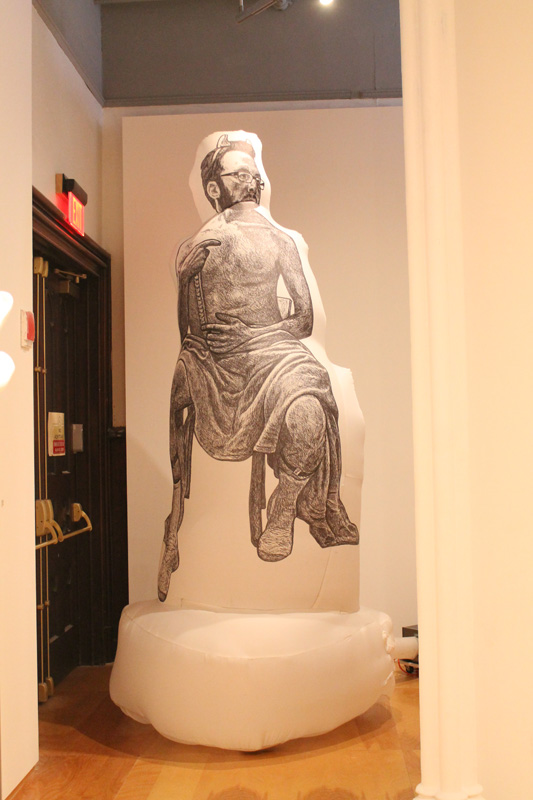
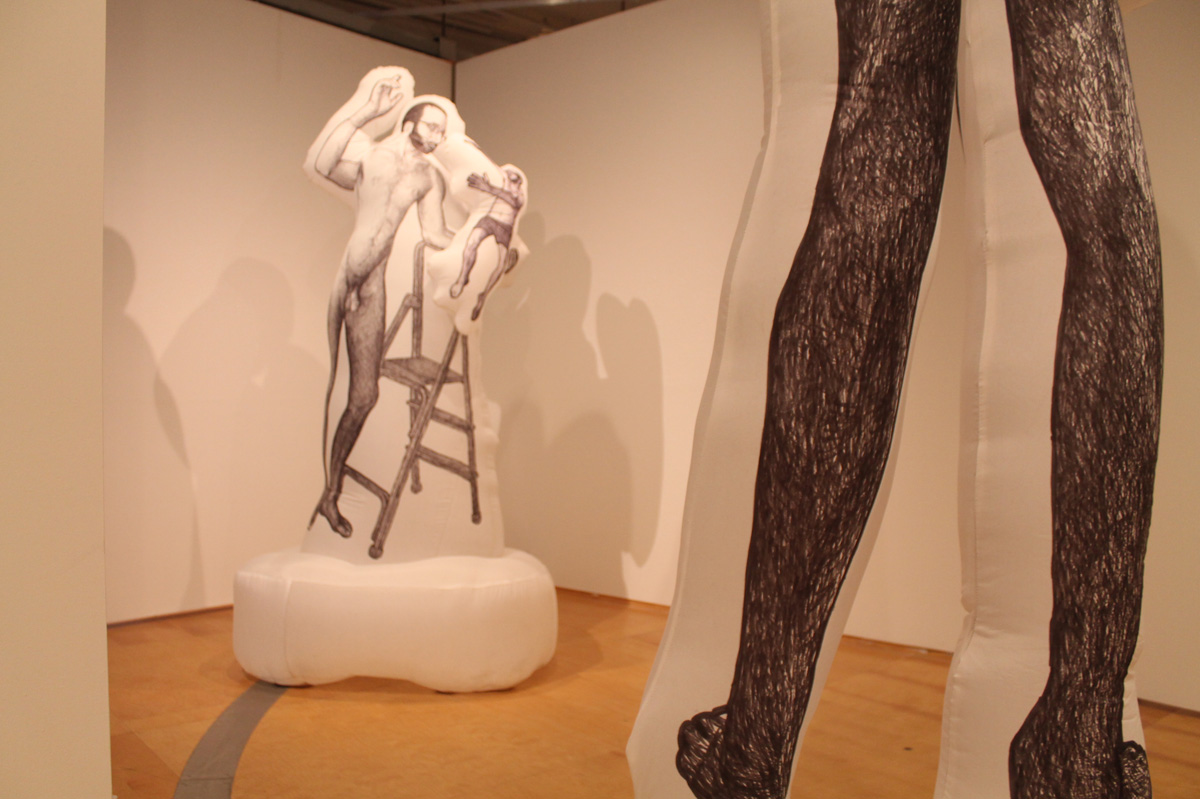
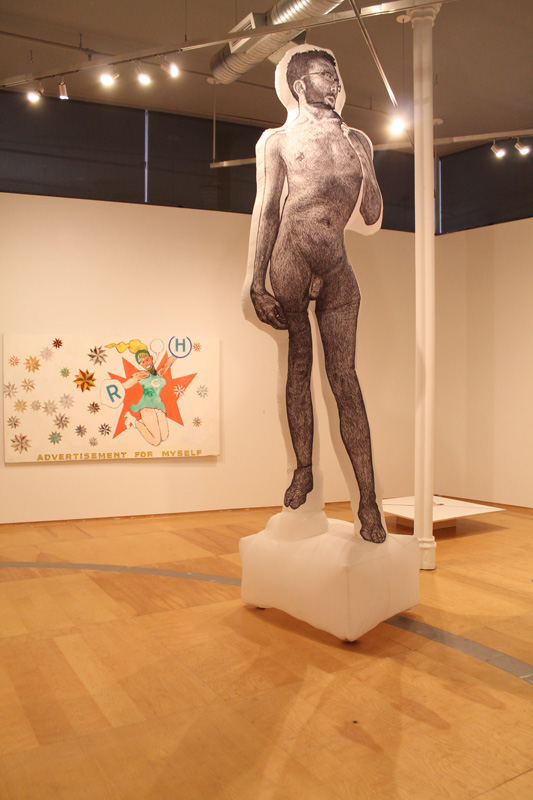
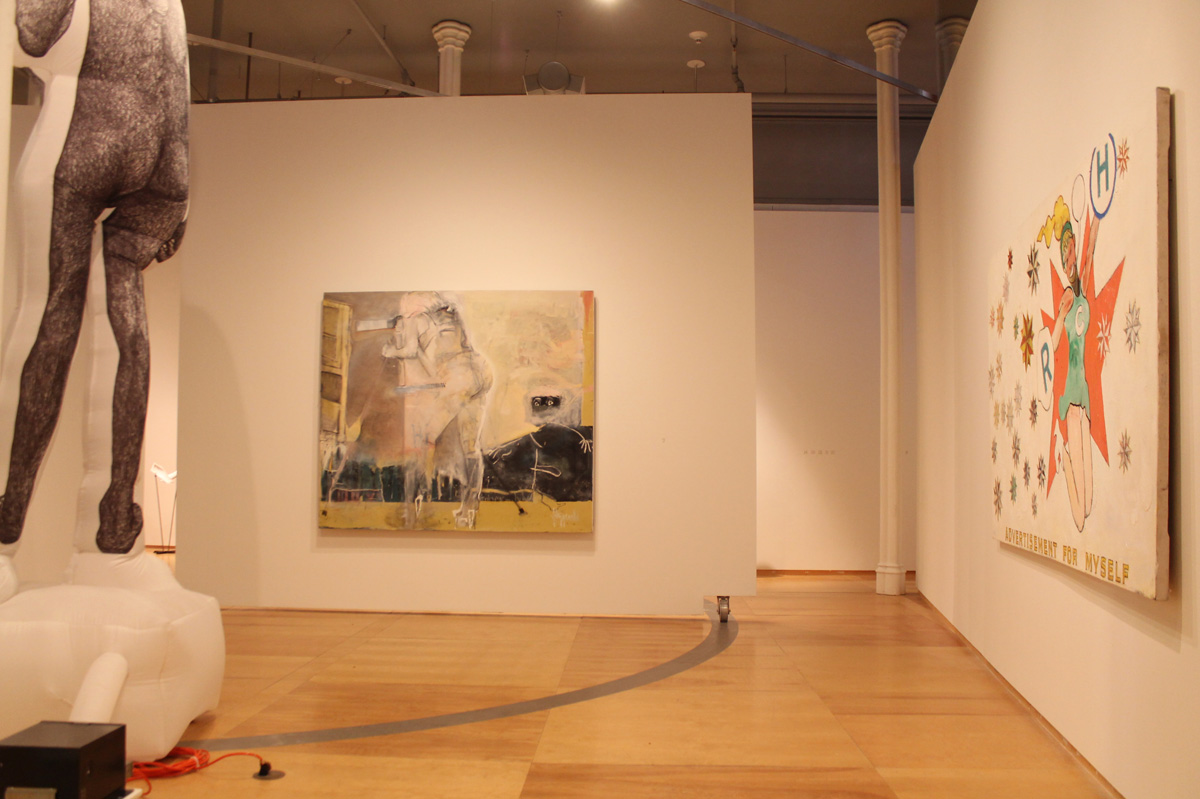
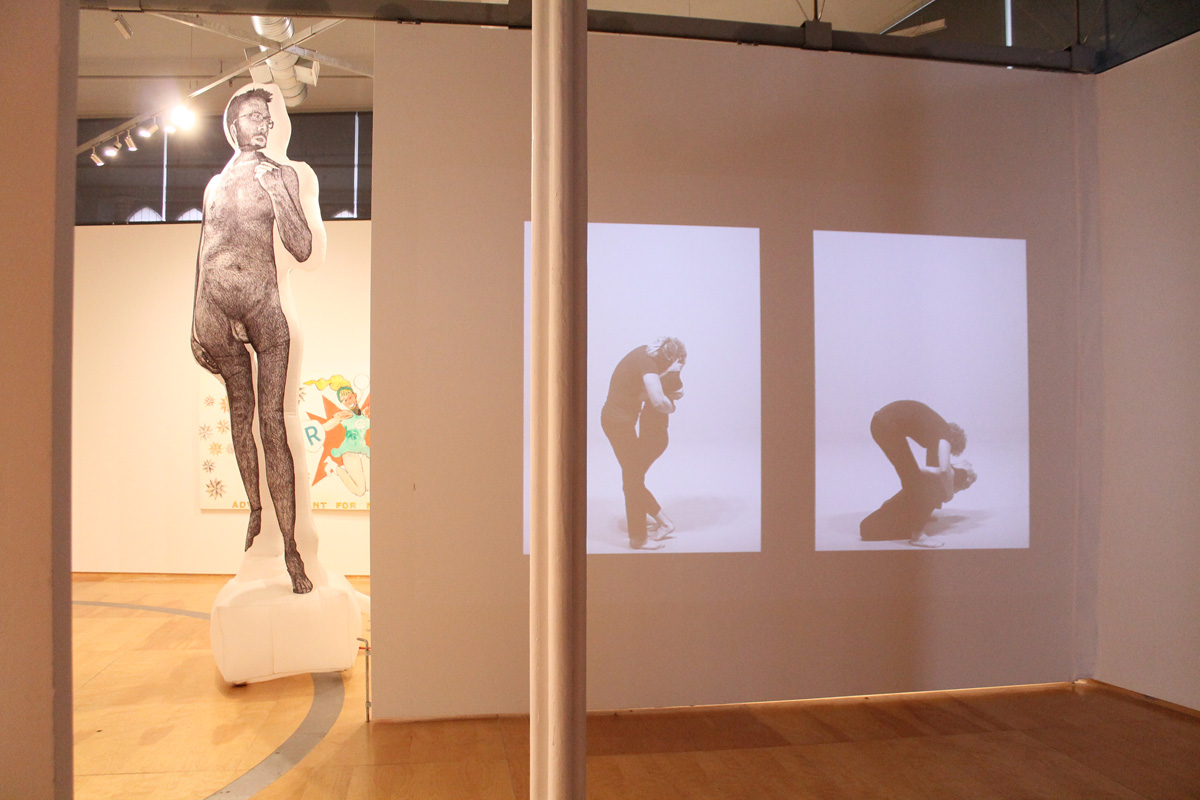
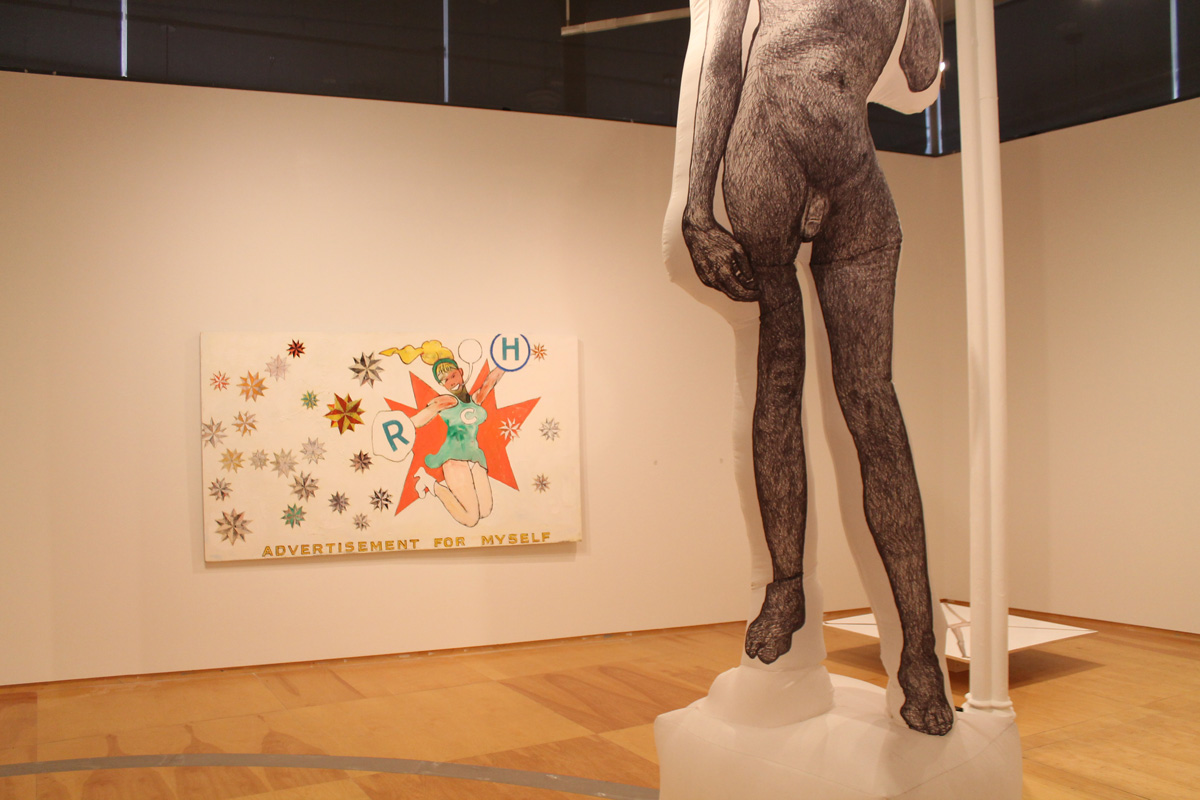
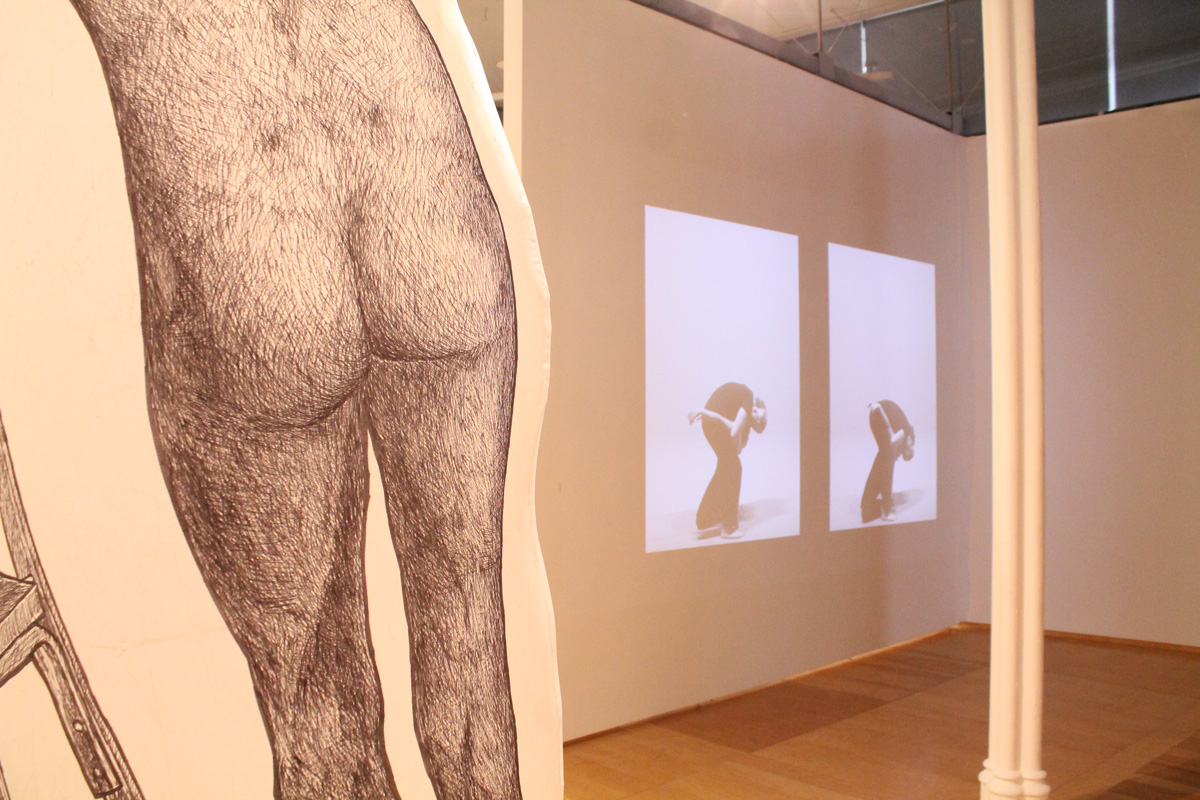
RW: Kyle made the observation that, “artists are goldfish.” However much space they have to work in is how much space they’ll use. In the case of Ben Entner, he told us that because of the size of his inflatables, he sometimes wouldn’t see them fully blown up until installing his works in a gallery. I think that artists make the work that they want to make, regardless of studio space (or lack thereof). Everybody has a reason for their preferred way of working but it generally comes down to being resourceful.
Q: Out of 115 studio visits, you’ve curated 36 artists into the project. How does that seem as a ratio?
JM: It is what it is. We never intended to produce an omnibus project that would encompass everyone. It’s almost a third of artists visited, which seems reasonable. And it’s indicative of curating in general—the third we’ve exhibited doesn’t cast aspersions on those we didn’t. What I’ve told everyone—and it’s true—is that everyone we’ve seen remains part of our conversation. As we figured out Part Four, a large part of our discussion was a review of our entire list of visits and recalling different works. That’s how we came to include Liz Bayan in Part Four, even though we visited with her more than half a year ago.
KB: We didn't plan on one ratio or another. Each show has been a matter of what fits together and what is timely rather than reaching a quota.
RW: Even though we never dictate how many artists are in any particular show, a one third ratio feels like a good percentage. Of course we always want to exhibit more works than end up in the show. Being concise however, allows the exhibition to feel more cohesive than if we just arbitrarily put in everything we liked with less consideration.
Q: It appears as though Part Four is a show dominated by the figure. How did that come about?
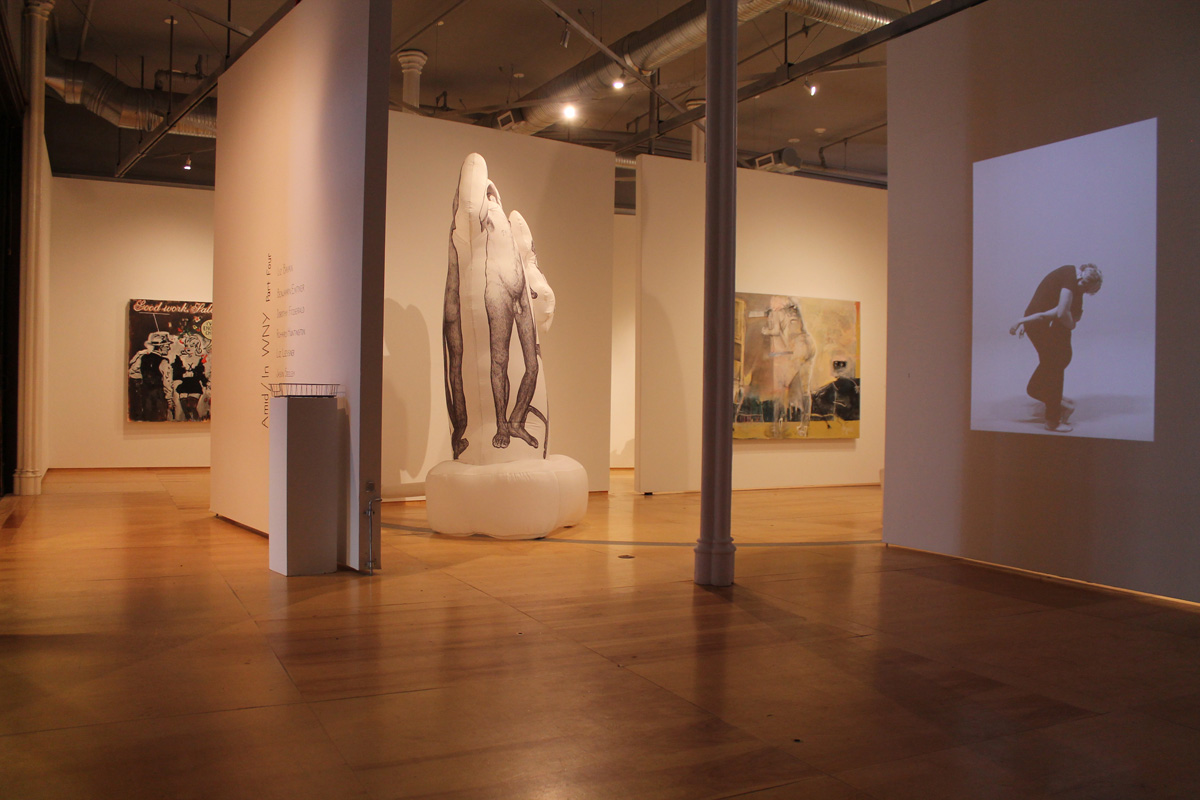
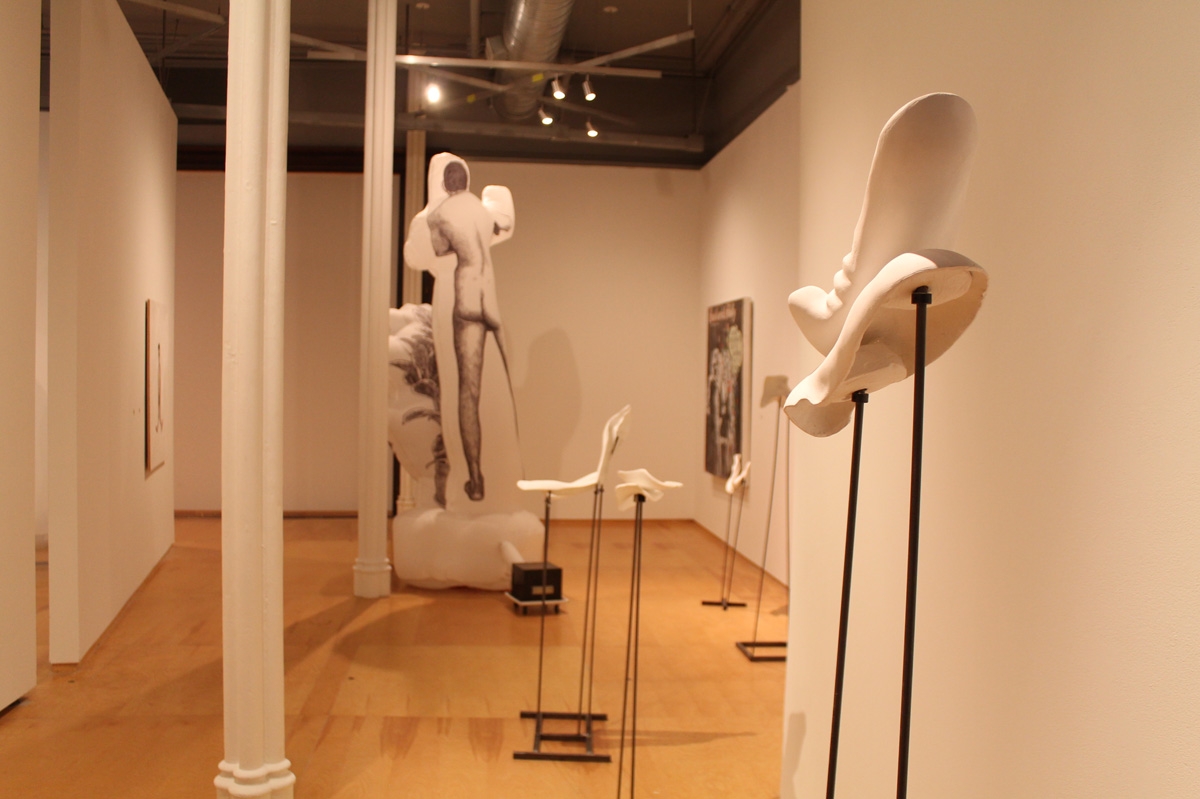
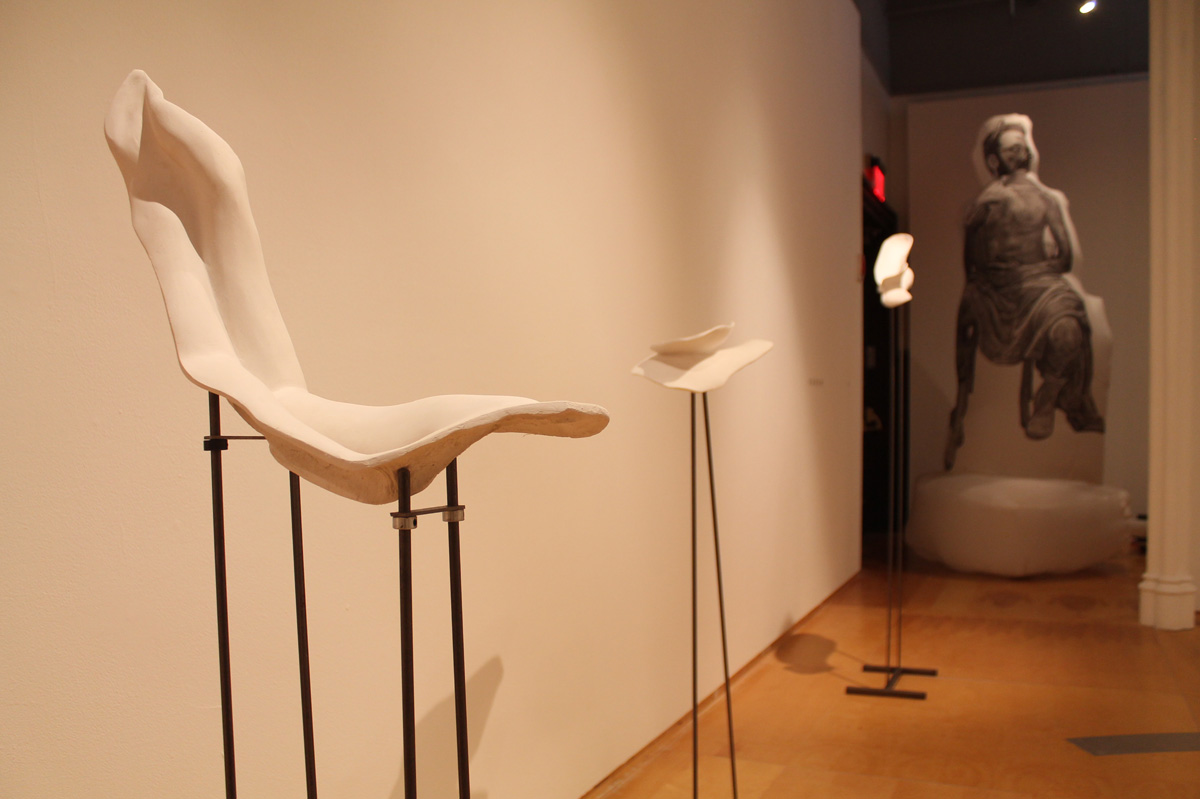
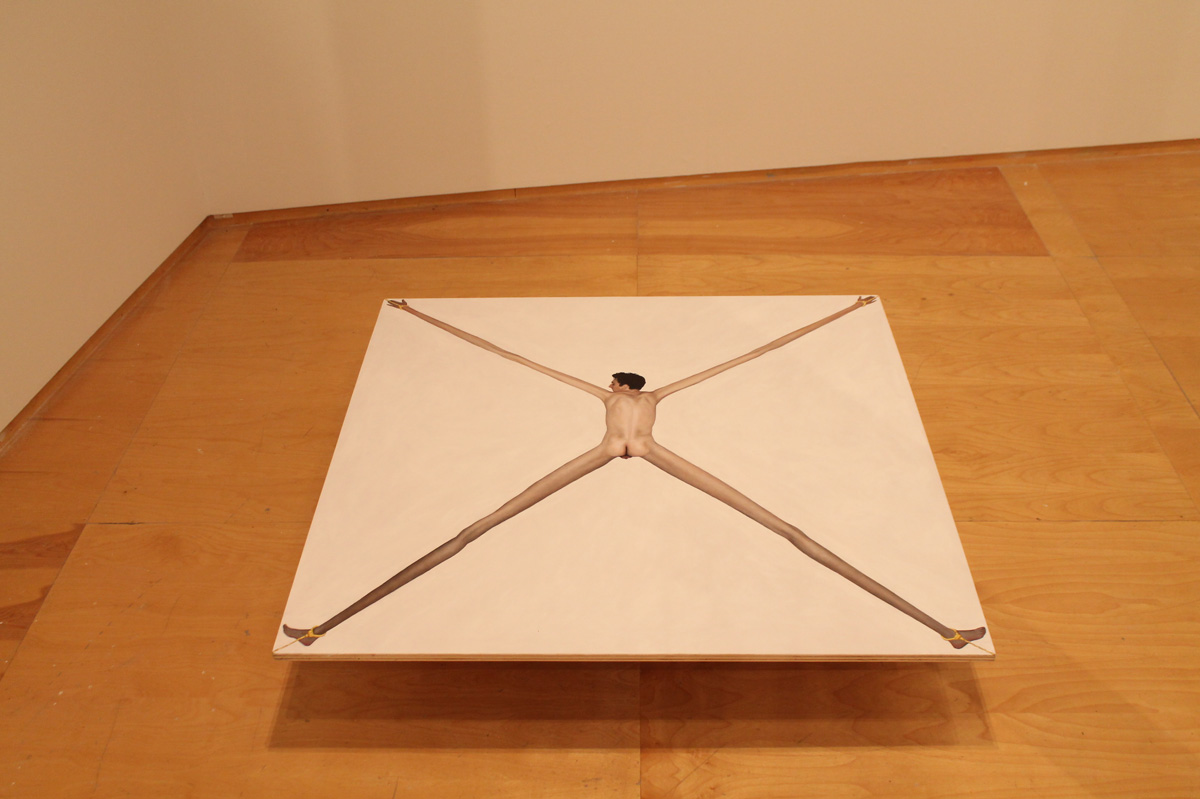
JM: Like all our previous exhibitions, there was zero premeditation. In terms of figuration, specifically, that just seems to be the way it played out. One of our first visits this round was with Benjamin Entner in Oswego and we were pretty taken with his inflated, drawn sculptures that riffed off of historical figurative sculptures. Those pieces remained upfront during our ongoing conversations so we would likely have included them, even if the show didn’t turn out to be so figurative. We knew we wanted to include Jason’s new figurative painting, from a previous round of visits. The rest of the pieces, or limbs, seemed to fall into some kind of natural place as we moved forward.
KB: With what we'd most recently seen, a show hovering somewhere around figurative themes and processes seemed the strongest. The exhibitions so far haven't tread too close to many of those rudimentary curatorial themes that you often see, like figuration. When it became clear that this show was developing that bent, we started mulling over how we could work in and around it.
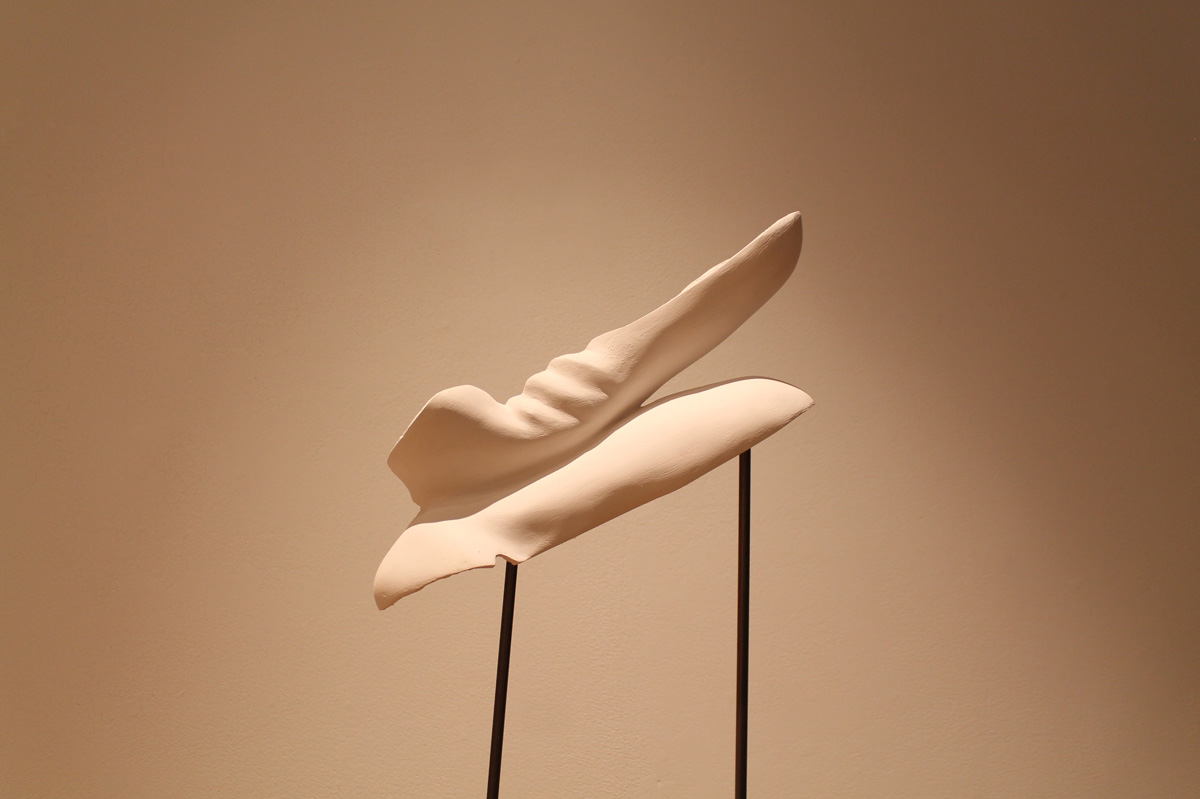
RW: There have been other instances where, in previous rounds, it seemed like it was going to be a certain kind of show but didn’t pan out that way. I think that it was just a matter of chance that the pieces that stuck with us most were predominately figure based. Like these guys said, the idea of a figurative show was not something we planned or necessarily aimed for, but it seemed natural to put Ben Entner’s inflatable’s with Liz Lessner’s cast pieces with Liz Bayan’s video and so-on.
Q: Is it surprising that you came up with a figurative exhibition?
JM: Kind of, but that’s how it goes. We really do follow the work that most enthuses us at a given time. In the case of the figure, we even did a call back to a work we saw back in November 2014 by Liz Bayan. Rebecca was savvy enough to remember that on our behalf.
KB: In a way, yeah. It's the only show so far with so clear a through line. But there are also a lot of people that work with the figure. With the quasi-survey aspect of Amid/In, a figurative show was statistically likely.
RW: What’s more surprising is that it we didn’t see this coming!
Q: Do you find yourselves comparing the pending exhibition to those that preceded it?
JM: Only marginally, to the extent that it’s the most current in our minds. We’re always really excited after we’ve decided what we’re showing and we’re on the verge of installing it, especially since you never know how that’ll go until you’re in the space with the work. That said, once we start reminiscing about the previous shows, we remember that we love them all in equal measure. Part Three was funny to us because we thought it was the weirdest exhibition we’d done and it ended up being a favorite one for many people.
KB: In a vague sense, a bit. It's hard to make direct comparisons between shows. The best you can do is try to assess that cloudy, amoebic aggregate that is the combination of work, gallery real estate, and context for an exhibition, and then compare the notion to that of the other shows. If the exhibitions were more narrow thematically, you'd have more of a foothold for comparison. Still, there's some metric intact for what works or doesn't. Amid/In has developed some distinguishable character traits over time, so we try to keep that identity in mind. Comparing the different shows is more a matter of how did they assume that identity differently rather than which one assumed it best.
RW: Honestly, the previous exhibition flies right out of my head as we begin installing new work. It’s really exciting to be in the empty galley and start imagining how all of the pieces will fit together in the space. Only after the opening do I find myself reflecting on the past Amid/In iterations and thinking about them in context of the entire survey. I just looked at images from the first installment yesterday and was struck by how beautiful and weird it was. Those same characteristics carry through all of the shows, especially the last one, and I think it’s because our mantra has been consistent, “show us the iconoclasts and weirdos.”
Q: Why do you think that was?
JM: Hard to say. You can never predict an audience’s reaction. But I recall that we followed our general metric of “iconoclasts and weirdos,” installed the exhibition, then kind of laughed among ourselves at its weirdness. It might have been the range of work, from that high def Flatsitter film to Evelene’s fake cardboard boxes to Bethany’s porcelain monkey baby to Allen’s quixotic sculptures to Pam’s ad hoc but very considered paintings to Ian’s one double-painted painting. It might have been that the weirdness of it all was a very acute and solid theme unto itself.
KB: I don't know. It was such a goofy one in a lot of ways. At the time I thought it had the greatest chance of the three exhibitions to be off-putting. Not to say that I wasn't confident in it before and after, but it was out enough to alienate. It was exciting to hear how people added up its disparate parts, though. Maybe it was the internal, rationalizing sort of brain math it required that made it exceptional.
RW: Who knows. I mean, it felt like the most unrelated in terms of the relationships between the different works but I really loved how it came together and I’m glad that other people seemed to feel the same way.
From November 2014 through August 2015, 115 studio visits have been accomplished and the work of 30 regional artists exhibited. To date, the following artists have been included in the survey:
Adrian Bertolone • Marie-Claire Bozant • Emily Churco • Denton Crawford • Flatsitter • Martin Freeman • Pam Glick • Bobby Griffiths • Kate Gaudy • Adele Henderson • Billy Huggins • George Hughes • Kevin Kline • Bethany Krull • Evelyne Leblanc-Roberge • Ian McCrohan • Brian Milbrand • Benjamin Minter • Tommy Nguyen • David Schirm • Peter Stephens • Rodney Taylor • Marc Tomko • Allen Topolski • Jeff Vincent • virocode • Alfonso Volo • Kurt Von Voetsch • Necole Zayatz
Amid/In WNY 2015 Part 4 is made possible with a generous grant from The Marks Family Foundation, and with major program support from The Andy Warhol Foundation for the Visual Arts and public funds from the New York State Council on the Arts (NYSCA), a state agency.